Thriving Through Menopause: Protecting Strength and Healthspan
October 18 is World Menopause Day. As a physical therapist, I want to focus on what menopause does to your muscles and bones, and on the menopause joint pain so many women quietly live with.
In my clinic, the pattern is familiar. A woman in her late 40s or early 50s comes in with a shoulder that slowly stopped reaching overhead. Another can't lie on her side at night because of hip pain. Another has heel pain with her first steps every morning, or knees that ache after the walks she used to love. Many women have been told "it's just age.” However, often it is something more specific, and something we can work with.
Why menopause shows up in your joints
Estrogen does far more than regulate your cycle. It supports muscle, bone, tendons, cartilage and the way your nervous system processes pain. As levels swing in perimenopause and then fall after your final period, every one of those tissues feels it.
In 2024, researchers proposed a name for this cluster of changes: the Musculoskeletal Syndrome of Menopause (MSM). It includes joint and muscle aches, loss of muscle mass and strength, declining bone density, frozen shoulder and tendon problems. A name matters. A pattern with a name gets taken seriously.
Here is what tends to change:
Bone. Bone loss speeds up in the years around your final period. Low bone density has no symptoms until something breaks.
Muscle and power. Muscle mass and strength decline, and power (the ability to produce force quickly) drops even faster. Power is what catches you when you trip on a curb.
Tendons and joints. Tendons become less resilient and joints can feel stiffer. Frozen shoulder, gluteal tendinopathy (that nagging pain on the side of the hip) and plantar fasciitis are all common in midlife women.
Pain. Shifting hormones, lighter sleep and higher stress can turn up the volume on pain. The same strain can hurt more and linger longer.
Everything around it. Sleep, stress tolerance, body composition and the gut microbiome all shift too. Each one feeds back into how your body feels and heals.
Your midlife health savings account
I like to describe midlife health as a savings account. Every strength session, every good night of sleep and every protein-rich meal is a deposit. Menopause changes the interest rate: reserves drain faster than they used to, so the deposits you make now matter more.
Those reserves are what you draw on later, when you want to travel, keep up with grandchildren or heal well after a fall or a surgery. The encouraging part is that muscle and bone respond to the right training at any age. Your deposits still count.

What you can do now: the Six Pillars
My Six Pillars framework is adapted from the Institute for Functional Medicine's pillars of lifestyle medicine. Here is how each one applies to midlife.
1. Movement
Lift heavy enough to be challenged. The last two or three reps of a set should feel genuinely hard. Light weights and bands are a starting point, not a destination.
Train power. Once you have a base, add speed: stand up quickly from a chair, step up briskly, toss a medicine ball.
Add impact, carefully. Bone responds to load and impact, such as small hops progressed over time. The LIFTMOR trial found that supervised high-intensity resistance and impact training improved bone density in postmenopausal women with low bone mass.
Practice balance daily. Stand on one leg while you brush your teeth.
Keep your range. Move your shoulders and hips through their full range every day, and keep walking.
2. Nutrition
Build every meal around protein. Midlife muscle needs a stronger signal to grow, and spreading protein through the day helps.
Fill your plate with colorful plants and fiber.
Ask your provider about calcium, vitamin D and whether supplements such as creatine make sense for you.
3. Gut health
Your gut microbiome shifts as hormones change, and it plays a role in inflammation and how your body processes estrogen.
Aim for plant variety, fiber and fermented foods. Notice how alcohol affects your sleep, digestion and joints.
4. Sleep
Poor sleep lowers your pain threshold and slows tissue repair.
Keep a consistent wake time, a cool bedroom and an earlier last drink of alcohol or caffeine.
If night sweats or waking at 3 a.m. are wrecking your nights, bring it up with your doctor. That is a medical conversation worth having.
5. Stress
Chronic stress works against muscle, bone and sleep.
Build in daily moments that calm your nervous system: slow breathing, time outside, a walk without your phone.
6. Community
Many women in midlife are caring for kids, aging parents and a career all at once.
Train with a friend, join a class or simply talk openly about what you're going through. Connection is protective, and you are not the only one.
When to get more help
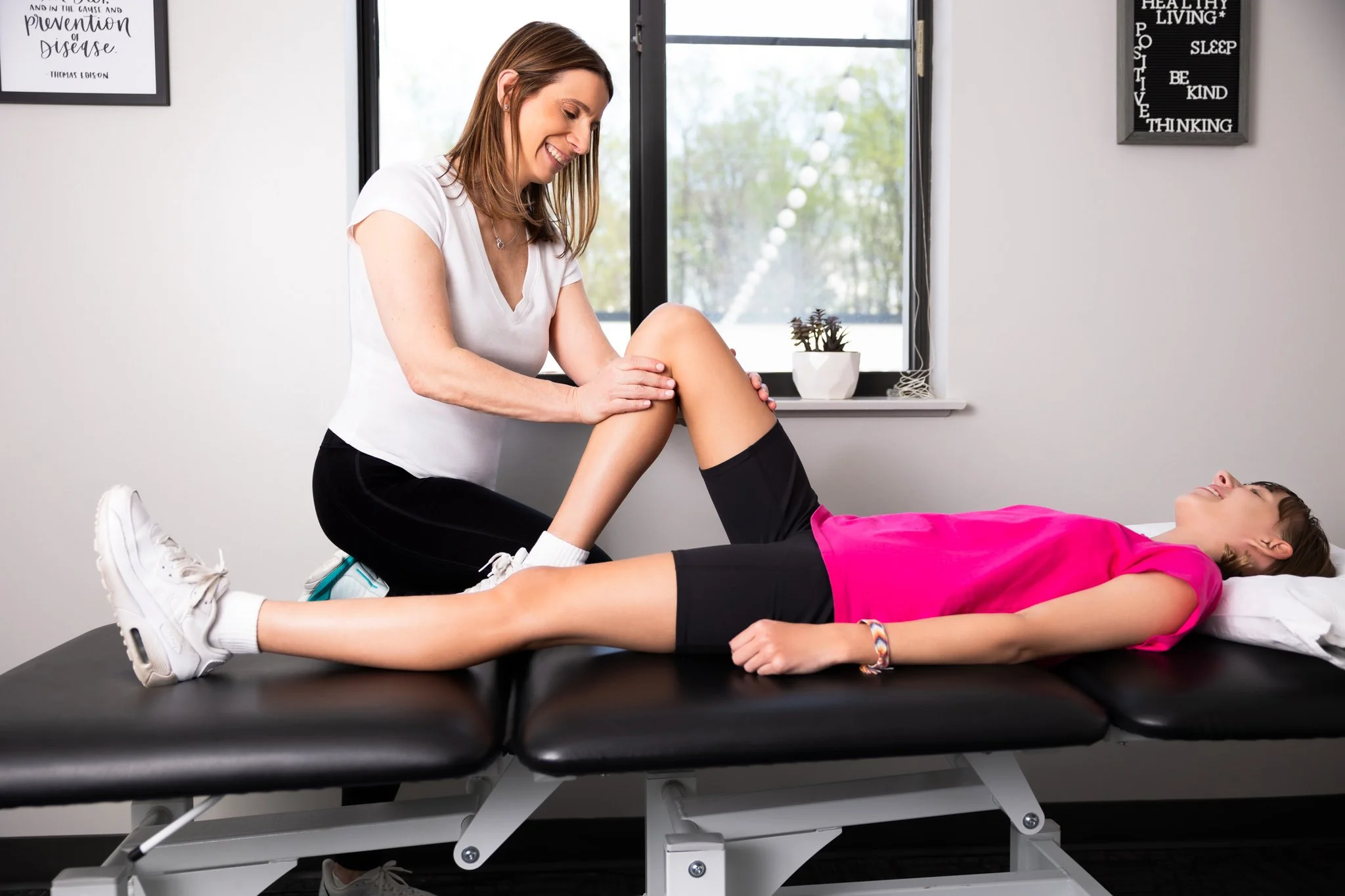
Pain that lasts more than a few weeks, wakes you at night or limits what you do deserves a physical therapy evaluation. Frozen shoulder and tendon problems respond better when caught early.
Bone density. Ask your doctor whether a DEXA scan is right for you, especially if you have a family history of osteoporosis or a past fracture.
Hormone therapy. If hot flashes, sleep disruption or joint pain are affecting your life, ask your physician whether menopausal hormone therapy is an option. It is a personal medical decision, and you deserve a full conversation about it.
Pelvic floor changes. Leaking, urgency, heaviness or pain with intimacy are common, not normal. A pelvic health physical therapist can help.
Menopause is a transition, not a finish line.
Menopause is a transition, not a finish line. The changes are real, and so are the tools. Strength training, power, impact, protein, sleep, stress care and connection are deposits you can start making this week.
Save this post, share it with a friend in midlife and reply to tell me your biggest question about your body right now. I read every one.